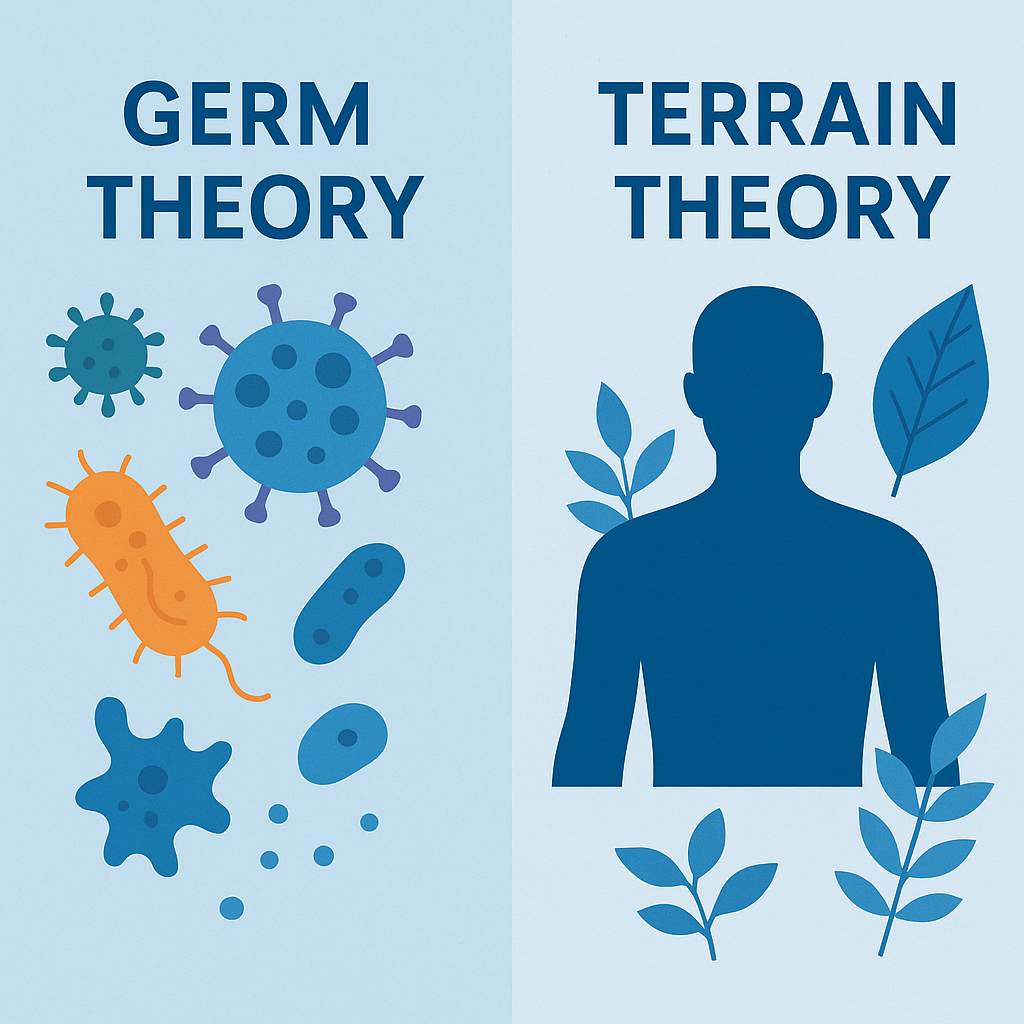
Terrain Theory vs. Germ Theory: What’s the Difference in Understanding Health?
When it comes to explaining how illness develops, two competing ideas often come up in holistic health discussions: terrain theory and germ theory. While germ theory is the foundation of modern medicine, terrain theory continues to capture attention, especially in natural health and wellness circles. Understanding both perspectives can empower you to make better decisions about your health.
What is Germ Theory?
Germ theory, developed in the 19th century by scientists such as Louis Pasteur and Robert Koch, is the widely accepted explanation for infectious disease. It states that microorganisms like bacteria, fungi, and viruses cause disease when they enter the body. This framework is the basis for antibiotics, vaccines, sanitation, and much of modern medicine.
What is Terrain Theory?
Terrain theory, on the other hand, suggests that the body’s internal environment (“terrain”) determines whether or not disease develops. Proponents argue that microbes are everywhere, but they only cause problems if the body is weakened, imbalanced, or toxic. In this view, nutrition, detoxification, stress management, and lifestyle choices are the true drivers of health or illness.
While Big Pharma based science does not accept terrain theory as a replacement for germ theory, it highlights an important point: your internal environment matters.
Key Differences Between the Two Approaches
- Cause of illness: Germ theory points to pathogens; terrain theory emphasizes the body’s state of balance.
- Prevention strategies: Germ theory supports vaccines, sterilization, and antibiotics. Terrain theory emphasizes nutrition, detoxification, and immune support.
- Focus: Germ theory treats the invader; terrain theory strengthens the host.
The Role of Lifestyle in Immune Health
Even though germ theory remains the scientific consensus, modern research agrees that terrain factors such as diet, sleep, exercise, and stress management play a powerful role in immunity. A well-nourished, balanced body is more resilient, recovers faster, and may experience fewer infections.
Holistic practitioners often integrate both perspectives: protecting against pathogens while also strengthening the body through lifestyle, whole-food nutrition, and stress reduction.
Why Terrain Theory Still Resonates
For many, terrain theory aligns with a holistic view of wellness. It empowers individuals by suggesting that your daily choices influence your health destiny. Whether it’s staying hydrated, eating nutrient-rich foods, reducing exposure to toxins, or practicing mindfulness, these strategies help create a strong foundation for long-term wellness.
Final Thoughts
While microbes do exist and are well documented scientifically, the conversation sparked by terrain theory brings valuable attention to the role of lifestyle and environment in health. The best approach may not be “either/or,” but rather a balance between medical science and proactive self-care. The terrain even at its strongest can be overwhelmed by a new or exotic pathogen, but on the same token a familiar microbe may become pathogenic if the terrain is weakened.
By focusing on both protection from germs and cultivating a strong inner terrain, you can support your immune system and overall well-being for the long run.