Dry Needling Franklin, TN
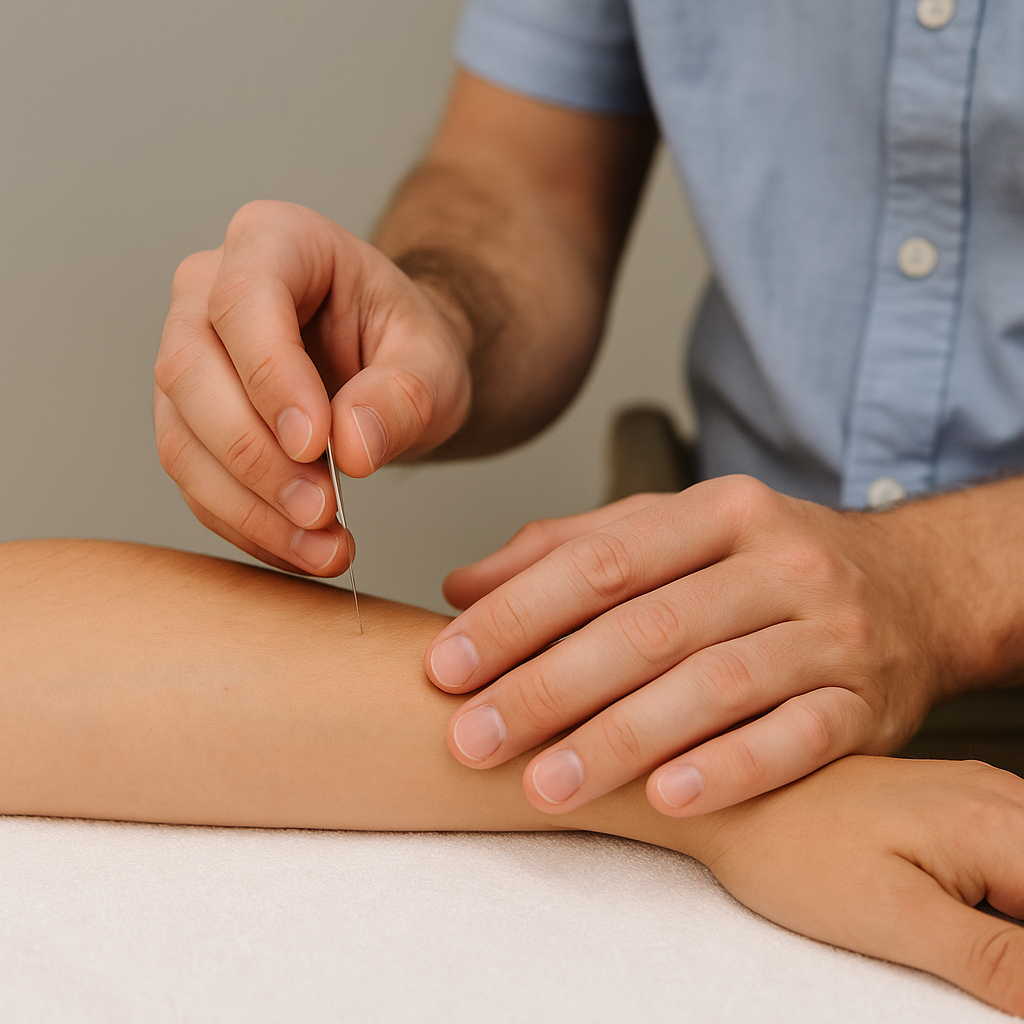
Dry Needling Franklin TN at Aiello Family Health
Precision Myofascial and Neuromuscular Treatment
At Aiello Family Health, we provide individualized dry needling for patients with muscular pain, trigger points, restricted movement, sports injuries, and other musculoskeletal conditions.
Dry needling is used primarily as a local and segmental treatment. Fine, sterile needles are placed into selected muscles, trigger points, and other appropriate tissues according to the patient's examination findings.
Depending upon the condition being treated, dry needling may also be combined with gentle electrical stimulation, 635 nm red laser therapy, chiropractic care, massage therapy, rehabilitation, or other musculoskeletal treatments.
The objective is to address the tissue that needs treatment while recognizing that muscle function, posture, and movement are also influenced by the larger neurologic and regulatory state of the patient.
How Dry Needling Works
Dry needling uses thin, sterile, single-use needles inserted into specific muscular and myofascial tissues.
The needle provides a direct mechanical stimulus to the treatment area.
When a trigger point or dysfunctional muscle region is treated, patients may experience a brief local twitch response or a change in muscular tension.
Dry needling may be used to address:
- muscular trigger points
- localized muscle tension and guarding
- myofascial pain
- restricted movement
- muscular dysfunction associated with injury or overuse
- selected tendon and soft-tissue conditions
- neuromuscular dysfunction associated with orthopedic conditions
The treatment is selected according to the tissue and functional findings rather than simply placing needles wherever pain is felt.
Local Myofascial Effects
Muscles can develop areas of persistent tension, guarding, trigger-point activity, and altered recruitment following injury, repetitive use, postural stress, or other mechanical demands.
Dry needling provides a direct stimulus to these tissues.
The objective is to help reduce abnormal muscular tension, improve mobility, decrease trigger-point activity, and restore more normal muscular function.
This makes dry needling particularly useful when a muscular component is limiting movement or contributing to an orthopedic problem.
Electrical Stimulation With Dry Needling
In selected patients, gentle electrical stimulation may be applied through the needles.
This is sometimes called electrical dry needling.
The electrical current creates repeated stimulation of the targeted muscle and local neuromuscular structures. Depending upon the treatment objective, this can produce rhythmic muscle contraction or sensory stimulation within the treated region.
I may use low-frequency stimulation, including 10 Hz stimulation, when appropriate for the particular treatment.
My interpretation of this treatment has changed.
I previously described 10 Hz electrical stimulation as a method of resynchronizing dorsal root ganglion timing and improving phase coherence before sensory information reached the thalamus.
I no longer use that explanation.
Electrical dry needling is now considered a local and segmental neuromuscular treatment rather than a method of correcting thalamocortical dysrhythmia or the biofield.
The Dorsal Root Ganglia and Segmental Nervous System
Dry needling can still interact with the nervous system without requiring a theory of DRG synchronization.
Sensory information from muscles, joints, skin, and other peripheral tissues enters the spinal nervous system through segmental pathways associated with dorsal root ganglia.
Needling and electrical stimulation therefore create sensory input that enters the nervous system from the treatment region.
That does not mean that the treatment is resetting a particular central frequency.
The more appropriate interpretation is that dry needling produces local mechanical and sensory stimulation within an established neuromuscular and segmental system.
This distinction keeps dry needling separate from the Biofield Assessment and Correction Protocol.
635 nm Red Laser With Dry Needling
At Aiello Family Health, 635 nm red laser therapy may also be applied locally during or after dry needling treatment.
This is different from the 808 nm near-infrared and 405 nm violet laser challenges used during Biofield Assessment.
The 635 nm red laser is used as a local photobiomodulation treatment directed toward the tissue being treated.
Red-light photobiomodulation can interact with cellular chromophores and mitochondrial processes and may influence cellular energy metabolism, local signaling, and tissue-recovery processes.
When used with dry needling, the objective is to combine the mechanical and neuromuscular effects of needling with a local light-based treatment intended to support recovery of the involved tissue.
Learn more about Cold Laser Therapy
Dry Needling and Biofield Treatment Are Different
This distinction is important within my current clinical model.
Dry needling treats the musculoskeletal and neuromuscular system.
Biofield Assessment evaluates the larger regulatory state.
They are not the same treatment.
A patient can have a trigger point that simply needs local treatment.
Another patient may demonstrate abnormal postural or muscle recruitment patterns associated with a larger compensated biofield state.
Some patients have both.
When both levels are present, Biofield Assessment and musculoskeletal treatment can be incorporated into the same overall plan of care while maintaining a clear distinction between their purposes.
Why Postural Regulation Still Matters
Muscles do not function independently.
Posture and movement require continuous coordination among the brain, spinal cord, peripheral nerves, proprioceptors, joints, and muscles.
A muscle can therefore be structurally capable of producing normal force while being recruited inefficiently during movement or postural testing.
Within the Aiello Biofield Model, some rapidly changing patterns of muscle recruitment may represent downstream neurologic expressions of a compensated regulatory state.
When those patterns are present, simply needling the muscle may not address the entire problem.
This is why the examination determines whether the patient requires local tissue treatment, regulatory assessment, or both.
Conditions Commonly Treated With Dry Needling
Patients at Aiello Family Health may receive dry needling as part of treatment for musculoskeletal conditions involving:
- muscular trigger points
- neck and shoulder pain
- low-back and hip pain
- muscular tension and guarding
- sports and overuse injuries
- repetitive-strain conditions
- restricted range of motion
- selected tendon-related conditions
- myofascial pain
- muscular components of tension-type headaches
- movement restrictions associated with muscular dysfunction
Dry needling is not appropriate for every type of pain, and examination is used to determine whether the involved tissue is a reasonable treatment target.
Dry Needling vs. Acupuncture
Dry needling and acupuncture may use similar thin needles, but the clinical frameworks used to select treatment points can be different.
Dry Needling
Dry needling in our office is based primarily upon:
- anatomy
- muscle and myofascial findings
- trigger points
- biomechanics
- neuromuscular function
- segmental relationships
- the patient's orthopedic examination
The treatment is directed toward specific tissues and functional findings.
Acupuncture
Traditional acupuncture developed within Chinese medicine and uses a broader system of meridians, point relationships, and traditional physiologic concepts.
Acupuncture points may be located directly at the symptomatic region or at distant locations selected according to the traditional diagnostic system.
The fact that both methods use needles does not mean that they are the same treatment.
Dry Needling as Part of Integrated Musculoskeletal Care
Dry needling is rarely considered in isolation from the rest of the musculoskeletal examination.
Depending upon the patient's condition, it may be combined with:
- chiropractic manipulation
- massage and myofascial treatment
- 635 nm red laser therapy
- acoustic shockwave therapy
- mobility work
- therapeutic exercise
- rehabilitation
- Biofield Assessment when a regulatory component is suspected
Each treatment has a different purpose.
Chiropractic manipulation addresses joint mobility and proprioceptive input.
Dry needling addresses selected muscular and myofascial tissues.
Massage addresses soft-tissue mobility and tension.
Shockwave provides mechanical stimulation to selected tissues.
Local red laser provides photobiomodulation.
Biofield Assessment evaluates the underlying regulatory state when indicated.
The treatment plan is built around the patient's findings rather than using every therapy on every patient.
Why Choose Aiello Family Health for Dry Needling?
Dry needling at Aiello Family Health is incorporated into a broader clinical examination rather than performed as a stand-alone procedure without considering the rest of the musculoskeletal system.
Our approach includes:
- individualized treatment based upon examination findings
- direct treatment of muscular and myofascial dysfunction
- electrical stimulation when appropriate
- local 635 nm red laser therapy when appropriate
- integration with chiropractic and massage therapy
- evaluation of posture and movement
- Biofield Assessment when functional findings suggest a larger regulatory component
The objective is to determine why a tissue is continuing to cause problems and address the relevant levels of the condition.
Home Audio Support
Some patients may also receive home-care audio files as a supportive part of their overall care.
These recordings are used to encourage relaxation and help calm the nervous system between visits.
They are not part of dry needling itself and are not used to diagnose a neuromuscular problem, determine which muscle should be treated, identify thalamocortical dysrhythmia, or select a dry-needling frequency.
Their role is simply supportive, particularly when pain, muscular guarding, or stress makes it difficult for the patient to relax between treatments.
Frequently Asked Questions
Why Do You Use Electrical Stimulation With Dry Needling?
Electrical stimulation can provide repeated local sensory and neuromuscular input through the inserted needles.
Depending upon the treatment objective, low-frequency stimulation may be used to create rhythmic muscle activity or provide additional stimulation to the treated region.
I do not currently use electrical dry needling as a method of diagnosing or correcting thalamocortical dysrhythmia.
Why Do You Use Red Laser Therapy With Dry Needling?
635 nm red laser therapy is used as a local photobiomodulation treatment.
Its purpose is to support cellular and tissue-recovery processes in the treatment area. It is different from the near-infrared and violet laser challenges used during Biofield Assessment.
Does Dry Needling Hurt?
Most patients experience a brief pinch when the needle is inserted. When a trigger point is stimulated, a quick twitch or cramping sensation may occur.
Temporary soreness, heaviness, or tenderness can occur following treatment and generally resolves.
How Many Sessions Will I Need?
The number of treatments depends upon the condition, how long it has been present, the tissues involved, activity level, and whether other mechanical or functional factors are contributing.
Some acute muscular problems respond quickly, while chronic or recurrent conditions may require additional treatment and rehabilitation.
Treatment frequency is based upon progress rather than a predetermined long-term schedule.
Is Dry Needling Safe?
Dry needling is generally considered safe when performed by appropriately trained clinicians using proper technique.
We use sterile, single-use needles and review relevant medical history before treatment.
Temporary soreness, minor bleeding, or bruising can occur. There are also less common but potentially more serious risks depending upon the anatomical region being treated, which is why appropriate training and anatomical precision are important.
What's the Difference Between Dry Needling and Acupuncture?
Both procedures use thin needles, but they can use different systems for deciding where and why those needles are placed.
Dry needling in our office primarily targets muscular, myofascial, orthopedic, and neuromuscular findings.
Traditional acupuncture selects points according to the diagnostic and meridian framework of Chinese medicine.
Can Dry Needling Help With Sports Injuries?
Dry needling may be useful when muscular tension, trigger points, restricted movement, or other appropriate myofascial findings are contributing to a sports injury.
Sports injuries can also involve tendons, ligaments, joints, cartilage, bone, or other structures, so treatment depends upon the actual injury rather than assuming dry needling is appropriate for every athletic condition.
Who Should Not Receive Dry Needling?
Dry needling may not be appropriate in certain circumstances, including some bleeding disorders, anticoagulant use, local infection, inability to safely tolerate needling, or other medical considerations.
Your history and examination are reviewed before treatment to determine whether dry needling is appropriate.
How Long Does a Dry Needling Session Take?
Treatment time varies according to the number of regions being treated and whether electrical stimulation, red-light therapy, or other musculoskeletal treatments are being incorporated.
Most dry-needling treatment itself can be completed within a relatively short portion of the overall visit.
A Modern, Precision-Based Approach to Dry Needling
Dry needling at Aiello Family Health is a targeted musculoskeletal and neuromuscular treatment.
Its purpose is not to “reset” the entire nervous system or correct the biofield through the needle.
It is one tool within a larger treatment system.
When the problem is muscular, we treat the muscle.
When the problem is mechanical, we address the mechanics.
When a larger regulatory pattern is present, we evaluate that separately.
Keeping these levels distinct allows each treatment to be used for the purpose it serves best.